- This event has passed.
MINDING THE LEO GAP AND THE FUTURE OF COMMERCIAL SPACE STATIONS (BEI), Apr 7, 2026, virtual, 1:00-2:00 pm ET
Event Navigation
Update, April 5: The updated participants list is:
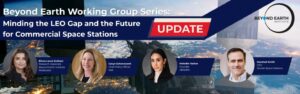
Original Entry: The Beyond Earth Institute (BEI) will hold a webinar on April 7, 2026 from 1:00-2:00 pm ET on “Minding the LEO Gap and the Future of Commercial Space Stations.”
More information and registration instructions are on the event’s website, which says:
We invite you to join the Beyond Earth Working Group Report Webinar Series to spotlight and unpack the 2025-2026 Working Group papers. Each session will feature the experts behind this work and offer a focused deep dive into the ideas shaping the future of space development.
In light of recent developments, the focus of this webinar discussion has been slightly adjusted to reflect the evolving landscape.
Update: Minding the LEO Gap and the Future for Commercial Space Stations
The transition from the International Space Station (ISS) to Commercial Low Earth Orbit Destinations (CLDs) represents one of the most consequential structural shifts in U.S. space policy in decades. This webinar will examine the findings of the Beyond Earth Institute’s 2025 Commercial Space Stations Working Group report, which evaluates whether NASA’s multi-phase CLD strategy can successfully sustain a continuous American presence in low Earth orbit while enabling a commercially viable space economy.
In addition, the discussion will address recent updates to NASA’s CLD approach, including the proposed shift toward a government-owned core module and a hybrid development model, and consider how these changes may reshape industry expectations, regulatory frameworks, and the long-term structure of the commercial LEO ecosystem. Drawing on insights from industry leaders, policymakers, and technical experts, the panel will explore the legal, regulatory, and operational constraints shaping this transition, as well as the strategic implications for U.S. leadership in an increasingly competitive orbital environment.