NASA Announces Major Reorganization
NASA announced a major reorganization today that Administrator Jared Isaacman said is designed to “accelerate mission delivery.” He also emphasized it is not about a reduction-in-force, program cancellations or closures, but an effort to achieve cost savings and “deliver on the mission.”
It’s not unusual for new NASA Administrators to change organizational structure and top-level personnel. Rumors have been circulating for several weeks that major changes were in the works.
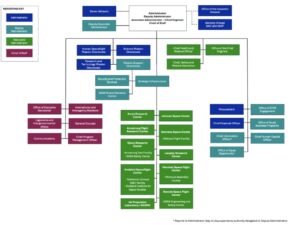
Many of them affect NASA headquarters. The five programmatic mission directorates are now combined into three along with personnel adjustments and changes to reporting chains. In addition, three of NASA’s nine civil service field Centers — Goddard, Glenn, and Kennedy — have new Directors, and NASA has decided to compete the contract for management and operation of the Jet Propulsion Laboratory, a Federally Funded Research and Development Center (FFRDC) operated by the California Institute of Technology (Caltech), when the current contract expires.
Isaacman posted a short video highlighting what he hopes to accomplish with the reorganization.
Today, we are announcing an initiative to put NASA’s mission first and resource the objectives that matter most.
We are organizing, planning, and investing in the talent and Centers to achieve the world-changing objectives only NASA is capable of accomplishing. pic.twitter.com/iVptjO1NvS
— NASA Administrator Jared Isaacman (@NASAAdmin) May 22, 2026
At Headquarters, the Exploration Systems Development Mission Directorate (ESDMD) and the Space Operations Mission Directorate (SOMD) are combined, as are the Aeronautics Research Mission Directorate (ARMD) and Space Technology Mission Directorate (STMD). The Science Mission Directorate (SMD) is unchanged. The Mission Support Directorate also remains in place, but under different leadership.
The merger of ESDMD and SOMD into the Human Spaceflight Mission Directorate (HSMD) returns the structure to how it was from 2011-2021. Then-Administrator Bill Nelson split them up so one could focus on human exploration of the Moon and Mars with the Artemis program, and the other on operations of the International Space Station in low Earth orbit (LEO) and efforts to facilitate commercial space stations to replace it. Isaacman said today both efforts are operational now.
“At the time these orgs were separated, sending astronauts to the Moon was conceptual, while LEO was operational. Today, both are operational. Bringing these efforts together will clarify responsibilities, strengthen accountability, accelerate decision making, and better position NASA to execute our mission with the efficiency and integration required for the challenges ahead.” — Jared Isaacman
Lori Glaze, who has been serving as Acting Associate Administrator (AA) for ESDMD, will lead the combined organization. A planetary scientist, she headed the Science Mission Directorate’s planetary science division before moving over to ESDMD in June 2024. Her two deputies are Kelvin Manning, most recently Acting Director of Kennedy Space Center, and Joel Montalbano, who’s been Acting AA for SOMD.
The three HSMD divisions are Low Earth Orbit (LEO), Moon Base, and Artemis. Dana Weigel, long-time ISS Program manager, will lead the LEO Division that will also oversee the Commercial Crew Program (CCP) and Commercial LEO Development (CLD). Carlos Garcia-Galán was introduced as program manager for Moon Base at the Ignition event on March 24. Jeremy Parsons will be program manager for Artemis, previously called the Moon-to-Mars program office.
Combining ARMD and STMD into a new Research and Technology Mission Directorate (RTMD) will unify aeronautics, space technology, and nuclear power and propulsion into a “single fastmoving organization focused on delivering breakthrough technologies.” Bob Pearce, long-time AA for ARMD, is retiring. The new RTMD AA is James Kenyon, who has been the Director of Glenn Research Center. (His Deputy at Glenn, Dawn Schaible, will take over as Center Director.) Wanda Peters will be Kenyon’s Deputy in RTMD, moving over from the Science Mission Directorate where she was Deputy AA for Programs.
The four RTMD divisions are Aeronautics, with Laurie Grindle as Director (she was Deputy Director of Armstrong Flight Research Center); Advanced Research and Technology with Greg Stover as Director (he was the Acting AA for STMD); Space Reactor Office, with Steve Sinacore directing development of the SR-1 Freedom space nuclear reactor and LR-1 lunar nuclear reactor; and Space Communications and Navigation (SCaN), which had been part of SOMD, and will continue to be led by Kevin Coggins.
The Mission Support Directorate will now be under the leadership of John Bailey, who was Deputy Director of Stennis Space Center. He succeeds David Mitchell, who is now “special assignment lead for NASA headquarters relocation.” Isaacman confirmed there are no plans to move NASA HQ out of the Washington, DC area, but he wants a more efficient footprint once the lease on the current building expires in 2028.
Amit Kshatriya remains as NASA Associate Administrator, the top civil servant position in the agency. He also now will be the agency’s Chief Engineer. Center Directors will contine to report to Kshatriya, but Mission Directorates will report to Isaacman.
As for the changes to Center leadership, Jamie Dunn is the new Director of Goddard Space Flight Center in Greenbelt, MD. Dunn has been serving as project manager for the Nancy Grace Roman Space Telescope that’s getting ready to launch in the August-September time frame. Isaacman and Nicky Fox, head of the Science Mission Directorate, often point out that Roman is ahead of schedule and below cost, crediting Dunn’s effective leadership. Cynthia Simmons has been acting Director since Makenzie Lystrup left in August 2025. She will return to her position as Deputy Director.
As noted earlier, Glenn Research Center Director James Kenyon is moving to headquarters to run the new RTMD. His deputy, Dawn Schaible, will step into the role of Center Director in Cleveland, OH.
On May 8, Isaacman appointed Brian Hughes to the position of “senior director of launch operations” at Kennedy Space Center, in Cape Canaveral, FL. Hughes does not have an aerospace background, but instead a long history in Florida politics including leading President Trump’s presidential campaign in Florida. He was NASA Chief of Staff for six months last year while Sean Duffy was Acting Administrator and left soon after Isaacman was confirmed in December, but now has returned in this new role. Today’s announcement elevates him to Director of KSC. When Hughes was initially appointed to KSC, the announcement said he would also oversee launch operations at NASA’s Wallops Flight Facility in Virginia, but David Pierce is still listed as Director of Wallops.
NASA’s press release and Isaacman’s blog post provide more details on the changes.
In a separate statement, Isaacman announced NASA will compete the contract with Caltech to manage and operate JPL when the existing contract expires in 2028. JPL has been managed by Caltech since it was founded by Caltech rocket scientists in the 1930s. Funded by the U.S. Army in the 1940s and 1950s, it successfully developed the first U.S. satellite to reach orbit, Explorer 1, in January 1958. JPL transferred from the Army Ballistic Missile Agency to NASA in December 1958, two months after NASA opened its doors.
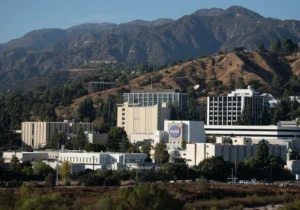
The agency said competition would allow the agency to “assess the potential benefits of alternative management approaches,” but emphazed JPL’s work “remains critically important.”
The work conducted at JPL remains critically important to the agency, and NASA is committed to maintaining continuity for active and future missions throughout the procurement process. NASA also is committed to maintaining the FFRDC’s existing physical location. — NASA
The House and Senate are in recess for the Memorial Day holiday, limiting congressional reaction to all the news today.
Scott Pace, Director of the Space Policy Institute at George Washington University, was NASA’s AA for Program Analysis and Evaluation from 2005-2008 when Mike Griffin was Administrator and later served as Executive Secretary of the White House National Space Council in the first Trump Administration. He told SpacePolicyOnline.com today that the reorganization “looks reasonable and reflects many past lessons learned and best practices. I expect there will be further details to come out in the months ahead.”
Mike Gold, who was NASA’s AA for the Office of International and Interagency Relations (OIIR) and later AA for Space Policy and Partnerships during Jim Bridenstine’s tenure, praised Isaacman’s leadership choices, especially Kathleen Karika as head of OIIR. Now President of Redwire Space, Gold told SpacePolicyOnline.com that engineering is extremely important, but “ultimately success at NASA is going to depend more on people than technology, and this is the right team to take us to the Moon.”
User Comments
SpacePolicyOnline.com has the right (but not the obligation) to monitor the comments and to remove any materials it deems inappropriate. We do not post comments that include links to other websites since we have no control over that content nor can we verify the security of such links.