NASA Classifies Starliner CFT as Type-A Mishap, Leadership Changes Coming
At a quickly announced news conference today, NASA Administrator Jared Isaacman released NASA’s investigation into the 2024 Boeing Starliner Crew Flight Test incident. Acknowledging that the Starliner spacecraft itself has deficiencies, Isaacman found the “most troubling” failures were in NASA decision-making and leadership, with mistakes from the program’s inception through execution. That includes not declaring CFT a Type-A Mishap from the beginning. Leadership changes at NASA will be made as the agency and Boeing continue to work together to make Starliner a success.
NASA announced the 2:00 pm ET news conference just after noon today while many were busy following the second Wet Dress Rehearsal for the Artemis II mission underway at Kennedy Space Center. Isaacman opened the briefing by saying that “within the next week” Congress will be briefed by NASA’s Aerospace Safety Advisory Panel (ASAP) and NASA would release its independent investigative report, perhaps prompting the unusual timing. The 311-page NASA report actually was released today.

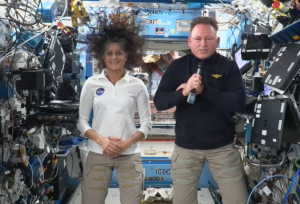
In a four-page letter to the NASA workforce that he posted on X, Isaacman recapped the beleaguered Starliner program through its two uncrewed Orbital Flight Tests (OFTs) in 2019 and 2022 and the Crewed Flight Test (CFT) in 2024. The CFT delivered NASA astronauts Butch Wilmore and Suni Williams to the International Space Station, but propulsion system failures led to temporary loss of six-degree-of-freedom control as it approached docking.
“Controllers and crew performed with extraordinary professionalism,” Isaacman said, and saved the day, but the propulsion failures were indicative of mistakes that “occurred from the program’s inception and continued throughout execution, including contract management, oversight posture, technical rigor, and leadership decision making.”
NASA ultimately decided Starliner was not safe to return the crew to Earth. It came back empty while Butch and Suni remained on the ISS for more than eight months, returning on a different spacecraft.
Following the termination of the Space Shuttle program in 2011, NASA awarded Boeing and SpaceX fixed price contracts in 2014 to develop two dissimilar crew transportation systems to ferry astronauts to and from the International Space Station through Public-Private Partnerships. Boeing was awarded $4.2 billion, and SpaceX, $2.6 billion. NASA wanted two systems to make sure at least one was available if the other was delayed or grounded.
SpaceX’s Crew Dragon made its first crewed flight in 2020 and now routinely delivers government and private astronauts to space, including Isaacman who made two flights on Crew Dragon in 2021 and 2024.
Boeing has struggled with Starliner though, and has had to absorb the lion’s share of the extra costs, which surpassed $2 billion last year.
NASA hadn’t said how much the Starliner CFT problems have cost the government until now. By designating this as a “Type A mishap,” that means the costs are more than $2 million and Isaacman said it exceeded that threshold “by a factor of 100,” or $200 million. During the news conference he was careful to clarify that in this case the Type A designation reflected the dollar number and the consequences if Starliner had not been able to dock, and was not meant to be comparable to the Space Shuttle Challenger or Space Shuttle Columbia tragedies, which also were Type A mishaps.
A NASA Type A mishap means a total direct cost of mission failure and property damage of $2 million or more, a crewed aircraft or spacecraft hull loss, or unexpected aircraft or spacecraft departure from controlled flight (with exceptions).
NASA and Boeing continue working together to determine and fix the root cause of the propulsion system failures and get Starliner ready to fly again. They’ve been talking about another uncrewed flight test carrying only cargo to the ISS as early as April and a crewed mission perhaps by the end of the year, but Isaacman stressed they will launch only when they are ready. “NASA will not fly another crew on Starliner until technical causes are understood and corrected, the propulsion system is fully qualified, and appropriate investigation recommendations are implemented.”
In a statement to reporters today, Boeing concurred that crew safety is paramount.
We’re grateful to NASA for its thorough investigation and the opportunity to contribute to it. In the 18 months since our test flight, Boeing has made substantial progress on corrective actions for technical challenges we encountered and driven significant cultural changes across the team that directly align with the findings in the report. NASA’s report will reinforce our ongoing efforts to strengthen our work, and the work of all Commercial Crew Partners, in support of mission and crew safety, which is and must always be our highest priority. We’re working closely with NASA to ensure readiness for future Starliner missions and remain committed to NASA’s vision for two commercial crew providers. — Boeing statement
The investigation that prompted today’s news conference began in February 2025, just after the new Trump Administration took office. NASA chartered an independent Program Investigation Team to “investigate the technical, organizational, and cultural contributions to the test flight issues.” Kennedy Space Center Director Janet Petro was Acting NASA Administrator at the time. The report was completed in November 2025 when Secretary of Transportation Sean Duffy was dual-hatted as Acting NASA Administrator. Isaacman was sworn in as NASA Administrator on December 18.
In a press release, NASA said it is now taking corrective actions.
“As a result, NASA is taking corrective actions to address the findings of the report, in an effort to ensure the lessons learned contribute to crew and mission safety of future Starliner flights and all NASA programs. Due to the loss of the spacecraft’s maneuverability as the crew approached the space station and the associated financial damages incurred, NASA has classified the test flight as a Type A mishap. While there were no injuries and the mission regained control prior to docking, this highest-level classification designation recognizes there was potential for a significant mishap.” — NASA
Some of the themes Isaacman and Associate Administrator Amit Kshatriya focused on today are aligned with Isaacman’s February 6 workforce directive calling for restoring “core competencies” at the agency. Isaacman said then that he wants a stronger internal NASA workforce to correct “over-reliance on outsourced engineering and staffing.”
Today, he pointed out that although Boeing built Starliner, NASA agreed to fly it. “NASA’s limited-touch acquisition and management posture left the agency without the systems knowledge and development insight required to confidently certify a human-rated spacecraft, and insight versus oversight was not applied consistently.”
“Programmatic advocacy exceeded reasonable bounds and placed the mission, the crew, and America’s space program at risk in ways that were not fully understood at the time decisions were being contemplated. This created a culture of mistrust that can never happen again, and there will be leadership accountability.” — Jared Isaacman
User Comments
SpacePolicyOnline.com has the right (but not the obligation) to monitor the comments and to remove any materials it deems inappropriate. We do not post comments that include links to other websites since we have no control over that content nor can we verify the security of such links.