What’s Happening in Space Policy November 30-December 6, 2025
Here is SpacePolicyOnline.com’s list of space policy events for the week of November 30-December 6, 2025 and any insight we can offer about them. The House and Senate are in session this week.
During the Week
It’s a busy week that includes two important congressional hearings — the Senate Commerce Committee’s second hearing on Jared Isaacman’s nomination to be NASA Administrator on Wednesday, and a House Science, Space, and Technology Committee hearing on “China’s Space Rise and Risks to U.S. Leadership” on Thursday.
The Senate Commerce Committee approved Isaacman’s nomination by a vote of 19-9 on April 30 after a hearing on April 9, but President Trump withdrew the nomination on May 31 after a falling out with Elon Musk, who recommended Isaacman. Trump reinstated the nomination last month, however, and the committee decided to hold another hearing.
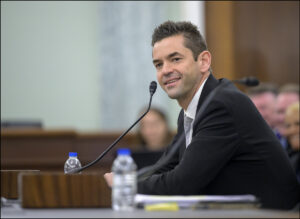
A lot has happened since April 9. The next day, Trump’s FY2026 budget request was released with its proposed 24.3 percent cut to NASA. Isaacman had talked about a “Golden Age of science and discovery” where NASA could do the “near-impossible” within its existing budget, including pursuing human missions to the Moon and Mars simultaneously. Final congressional action on NASA’s FY2026 budget is pending, but while the House and Senate Appropriations Committees rejected the dramatic budget cut, they have their own views on how the money should be spent, especially the shares for science versus human spaceflight.
The Senate committee likely wants to hear from Isaacman directly on his expectations on how to balance whatever money NASA gets among human spaceflight, science, technology, and aeronautics. The future of the Artemis program is sure to be a major topic. Committee chair Sen. Ted Cruz (R-TX), a strong Trump supporter, nonetheless differs with the Trump Administration on whether the Space Launch System (SLS) and Orion should continue after Artemis III, keeping the Gateway lunar space station, and other Moon-to-Mars plans. Cruz added $10 billion to the reconciliation bill (the One Big Beautiful Bill Act, OBBBA) for NASA mostly for human spaceflight. Isaacman is almost certain to be asked to commit to spending it as the bill directs. Other key topics likely will be the future of NASA’s science enterprise, development of a nuclear reactor for the Moon, and concerns that SpaceX’s Starship Human Landing System won’t be ready to land astronauts back on the Moon in 2027 or even before the end of the Trump Administration. Cruz expressed confidence in Isaacman in a November 18 post on X.
This is a critical moment for @NASA as it works to deploy the historic funding secured in the One Big Beautiful Bill to beat China back to the moon and bolster U.S. leadership in space.
I know @rookisaacman is committed to having American astronauts return to the lunar surface… pic.twitter.com/yec0AbATuB
— Senator Ted Cruz (@SenTedCruz) November 18, 2025
That’s on Wednesday. On Thursday, House SS&T’s Space Subcommittee will hold a hearing on China’s space program and what impact it might have on U.S. leadership in space. The Senate Commerce committee held its own China hearing in September. Staying ahead of China in space is one topic on which Republicans and Democrats agree.
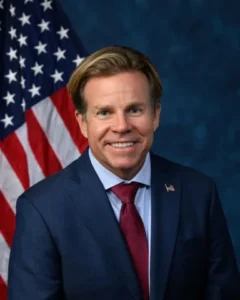
The House subcommittee will hear from Dean Cheng, Clayton Swope, Patrick Besha, and Mike Griffin. Cheng is a veteran expert on China military and security issues who spent many years at the Heritage Foundation and now is a non-resident Senior Fellow at the Potomac Institute for Policy Studies. Swope is Deputy Director of the Aerospace Security Project at the Center for Strategic and International Studies (CSIS) who previously worked for Amazon on Project Kuiper, as a House staff member, and for the CIA. After a long career at NASA as an Asia expert in the Office of International and Interagency Relations, Besha moved to NASA’s Office of Technology, Policy and Strategy that was eliminated in April and its employees RIF’ed. He then founded the Global Space Group. Mike Griffin is very well known to readers of this website, but as a quick reminder of some of his more recent positions he was NASA Administrator in the second half of George W. Bush’s Administration when the Constellation program to return humans to the Moon by 2020 got underway (later terminated by the Obama Administration), Under Secretary of Defense for Research and Engineering in the first Trump Administration, and now is co-President of LogiQ, Inc. Should be interesting!
Swope will also participate in a CSIS event on China on Tuesday. “Keeping China Grounded: Ensuring Long-Term U.S. Tech Leadership in Low Earth Orbit” will cover topics ranging from wireless leadership, to national security, to international issues including the 2027 World Radio Conference (WRC-27) and the European Space Act, to technological innovations in space and LEO. The FCC’s Jay Schwarz, Chief of the Space Bureau, will also be there. The full list of speakers isn’t posted on the CSIS website, but it looks good. A virtual option is available.

Lots of other great events here and abroad as usual. We’ll highlight just two more.
First is on the national security space front. The Mitchell Institute will hold its next Schriever Spacepower series webinar on Wednesday with Maj. Gen. Chris Povak, Deputy Director of the National Reconnaissance Office (NRO). Unfortunately it’s at the same time as the Isaacman hearing, but the Mitchell Institute usually posts the video pretty quickly. NRO proudly points out how much its operations are changing with the advent of comparatively inexpensive commercial satellites. They’ve launched 200 satellites in the last two years instead of just a handful per year in the past. Povak will talk about the “dramatic transformation” that’s underway.
Second is an event organized by NOAA’s Office of Space Commerce (OSC) on “Financing the Final Frontier.” It’s in collaboration with AE Industrial Partners and will take place in-person at their offices on K Street in D.C. on Tuesday. Panels include “Picking the Right Bets in the Space Economy,” “Novel Pathways to Accelerate U.S. Space Innovation,” and “Learning from the Surge: Investor Views on the Era of Space Finance.” Taylor Jordan, confirmed on October 7 as Assistant Secretary of Commerce for Environmental Observation and Prediction and NOAA Deputy Administrator, is now Acting Director of OSC and will give a keynote address. Janice Starzyk, who’s been Acting Director since the change in administrations, has returned to her role as Deputy Director and will moderate the first panel. Carissa Christensen from BryceTech, Caleb Henry from Quilty Space, Dave Cavossa from the Commercial Space Federation, Todd Harrison from American Enterprise Institute and Derek Tournear from the Space Development Agency are among the terrific line-up of panelists.
Those and other events we know about as of Sunday morning are shown below. Check back throughout the week for others we learn about later and add to our Calendar or changes to these.
Monday-Tuesday, December 1-2
- Committee on Solar and Space Physics (National Academies), National Academy of Sciences building, 2101 Constitution Ave, NW, Washington, DC, open sessions will be livestreamed
Monday-Thursday, December 1-4
- International Conference on Space Robotics (iSpaRo), Sendai, Japan
Tuesday, December 2
- Financing the Final Frontier (U.S. Office of Space Commerce), AE Industrial Partners, 3000 K St., NW, Washington, DC, 9:00 am-12:30 pm ET
- Keeping China Grounded: Ensuring Long-Term U.S. Tech Leadership in Low Earth Orbit (CSIS), 1616 Rhode Island Ave., NW, Washington, DC/online, 2:00-5:00 pm ET
- Space News ICON Awards, Johns Hopkins Bloomberg Center, 555 Pennsylvania Ave, NW, Washington, DC. 4:30-8:00 pm ET
Tuesday-Thursday, December 2-4
- Cislunar Security Conference (JHUAPL), Johns Hopkins University Applied Physics Lab, Laurel, MD
Wednesday, December 3
- Senate Commerce (second) Nomination Hearing for Jared Isaacman to be NASA Administrator, 253 Russell Senate Office Building, 10:00 am ET (webcast)
- Schriever Spacepower Series with NRO’s Maj. Gen. Chris Povak (Mitchell Inst), virtual, 10:00-11:00 am ET
Wednesday-Thursday, December 3-4
- Lunar Economy Summit (Thales Alenia Space), Torino, Italy
- Space-Comm Scotland, Glasgow, Scotland
Wednesday-Saturday, December 3-6
Thursday, December 4
- HSS&T Hearing on China’s Space Rise and Risks to US Leadership, 2318 Rayburn House Office Building, 9:00 am ET (webcast)
Thursday-Friday, December 4-5
- Space Weather Roundtable (National Academies), Keck Center, 500 5th St. NW, Washington, DC, open sessions will be livestreamed
User Comments
SpacePolicyOnline.com has the right (but not the obligation) to monitor the comments and to remove any materials it deems inappropriate. We do not post comments that include links to other websites since we have no control over that content nor can we verify the security of such links.