What’s Happening in Space Policy November 8-14, 2026
Here is SpacePolicyOnline.com’s list of space policy events for the week of November 8-14, 2026 and any insight we can offer about them. The House and Senate are in session this week.
During the Week
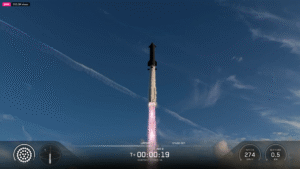
This is a REALLY busy week, with a Federal holiday in the middle. For starters, NASA’s MAX POWER event continues today at Kennedy Space Center, Congress returns to work tomorrow, the Senate Commerce Committee will consider two NASA and one FCC nominations on Tuesday, ULA will launch Vulcan on Friday for the first time since February, and SpaceX will launch Starship later that day and try to catch both Booster and Ship back at the launch site for the first time.
Wednesday is Veterans Day, a federal holiday. The House plans to be in session anyway according to the House Majority Leader’s schedule. The Senate’s schedule shows the chamber in session only on Monday and Tuesday.
The effect of the decisive Democratic wins in the midterm elections last week on what either party can accomplish in the remaining weeks of the 119th Congress remains to be seen. At the moment the House plans to adjourn for the year on December 17 and the Senate on December 18, though that could change. Democrats will control both the House and Senate when the 120th Congress convenes at noon on January 3, 2027.
As of this morning, the Associated Press (AP) shows Democrats with 254 House seats next year and Republicans with 162, with 19 races still to be determined. It’s not just that Democrats will have control, but the margin they will have over Republicans. Republicans now narrowly control the House 218-214, with 1 Independent and 2 vacancies. Democrats will have a more comfortable edge.
The Senate will have 54 Democrats (including two Independents who caucus with Democrats) and 44 Republicans, with the races in Alaska and Mississippi still too close to call. Both are now held by Republicans (Dan Sullivan and Cindy Hyde-Smith). Even if they keep those seats, Democrats will have a relatively comfortable majority.
The next step is for both chambers to choose their leaders for the next Congress. House and Senate Republicans plan to do that this week. Rep. Steve Scalise (R-Louisiana), the current Majority Leader, and Rep. Jim Jordan (R-Ohio) are facing off to be Minority Leader in the House. Sen. John Thune (R-South Dakota) is expected to be reelected to be his party’s leader in the Senate. House Democrats are expected to choose their leader next week, while the date for the Senate to do so is unclear. Current House Minority Leader Hakeem Jeffries (D-New York) and Senate Minority Leader Chuck Schumer (D-New York) are seeking the top spots.
There’s a lot of work to do between now and the end of this Congress, including passing appropriations bills or extending the Continuing Resolution past December 11, and passing the National Defense Authorization Act (NDAA).
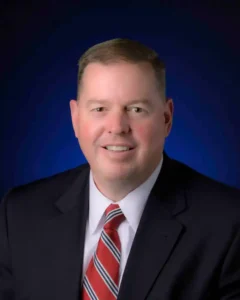
The Senate Commerce Committee starts off with a hearing on Tuesday to consider several nominations. Among them are Joshua Shoemaker to be NASA’s Chief Financial Officer and Robert Steinau to be Inspector General (IG). Shoemaker was Controller of the Republican National Committee from March 2025-March 2026. Steinau is currently NASA’s Assistant IG for Investigations. They will also consider the nomination of Danielle Thumann Severs to be one of the five FCC commissioners. Her nomination hearing was originally scheduled for September 17, but postponed. She’s currently Senior Counsel to FCC Chairman Brendan Carr.
Off the Hill, NASA is continuing its MAX POWER event today at Kennedy Space Center. President Trump spoke there on Friday evening as part of the UP.Summit component of the aerospace event. He reiterated his support for NASA’s Moon/Mars program and Isaacman’s leadership of the agency, but most of the NASA-related portions of his speech concerned NASA’s aviation plans, especially the CAPEWEEK airshow at KSC Isaacman is planning for March-April 2028. Aviation is outside the scope of this space policy website, but more information is available for those who are interested. Trump was especially enthusiastic about it.
Isaacman and his team gave an update on Moon Base last evening at MAX POWER. We’ll have more on that in a separate post.
NASA’s five divisions in the Science Mission Directorate are holding Town Hall meetings and two are this week: Heliophysics tomorow (Monday) and Astrophysics on Friday. Earth Science was on October 29. We haven’t seen the dates for Planetary Science or Biological and Physical Sciences.
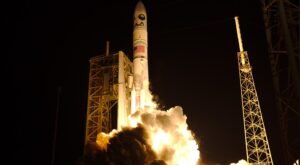
ULA will launch their Vulcan rocket on Friday for the first time since February when, for the second time, one of the Northrop Grumman Solid Rocket Boosters malfunctioned. As with the first SRB malfunction in 2024, Vulcan’s core stage compensated for the underperformance and along with the Centaur V upper stage put the payload in the correct orbit nonetheless. The U.S. Space Force paused use of Vulcan for its missions until it’s confident the problems are resolved. It is reassigning some launches to SpaceX for now, swapping them with a plan to move launches currently assigned to SpaceX to Vulcan once Vulcan performs to their specifications. For now, ULA is using Vulcan for commercial launches like this one, which will put 40 Amazon Leo communication satellites in orbit.
And as we said at the top, later on Friday SpaceX will launch Starship Integrated Flight Test-15 (IFT-15). IFT-14 was the first time Starship made it to orbit. It splashed down in the Indian Ocean, but this time SpaceX plans to demonstrate the full reusability Starship was built for. The name Starship is often used to refer to both the first stage, the Super Heavy “Booster,” as well as the second stage Starship or “Ship.” SpaceX has caught the Booster three times already, but not since IFT-8 in March 2025. The Boosters have made hard or soft splashdowns in the Gulf since then. This time they’ll not only try to get the Booster back to the launch tower, but Ship as well after it makes 14 orbits. That’ll take 22:32:34 hours. Will be amazing if it happens as planned.
Those and other events we know about as of Sunday morning are shown below. Check back throughout the week for others we learn about later and add to our Calendar or changes to these.
Sunday, November 8
- NASA MAX POWER, Kennedy Space Center (continued from yesterday)
Monday, November 9
- NASA Heliophysics Town Hall, virtual, 1:00 pm ET
- ISU-DC Space Café with Former NASA Chief Scientist Jim Green, 1020 N Highland St, Arlington, VA, 6:00-8:00 pm ET
Monday-Tuesday, November 9-10
- Space & Satellites USA 2026 (Reuters), Washington, DC
Monday-Wednesday, November 9-11
- Committee on Planetary Protection (Natl Acad), Irvine, CA, open sessions livestreamed
Monday-Friday, November 9-13 (continues next week)
- ITU Plenipotentiary, Doha, Qatar
Tuesday, November 10
- Senate Commerce Hearing on Nominations for NASA, FCC, 253 Russell Senate Office Building, 10:30 am ET (webcast)
Wednesday, November 11
- Veterans Day (Federal Holiday)
Wednesday-Friday, November 11-13
- Argentina Space 2026, Salta, Argentina
Friday, November 13
- NASA Astrophysics Town Hall, virtual, 12:00 pm ET
- ULA Vulcan Launch of 40 Amazon Leo Satellites, Cape Canaveral Space Force Station, FL, 12:54 pm ET
- Starship IFT-15 Launch and Catch, launch window opens 5:45 pm ET
Saturday, November 14 (tentative)
- If Starship launches on November 13 and the mission goes as planned, SpaceX intends to “catch” the Ship 22:32:34 hours after liftoff, which will be mid-afternoon ET on Saturday
User Comments
SpacePolicyOnline.com has the right (but not the obligation) to monitor the comments and to remove any materials it deems inappropriate. We do not post comments that include links to other websites since we have no control over that content nor can we verify the security of such links.